NDC returned to Sydney this year and SSW TV was there alongside .NET Rocks! to catch all of the action with our Ask Me Anything! sessions.

As usual there were a host of top industry pros talking about various subjects related to software development. This year, SSW TV worked alongside .NET Rocks! to run an entire track of live interviews with some of those speakers after their sessions and talked about a number of topics.

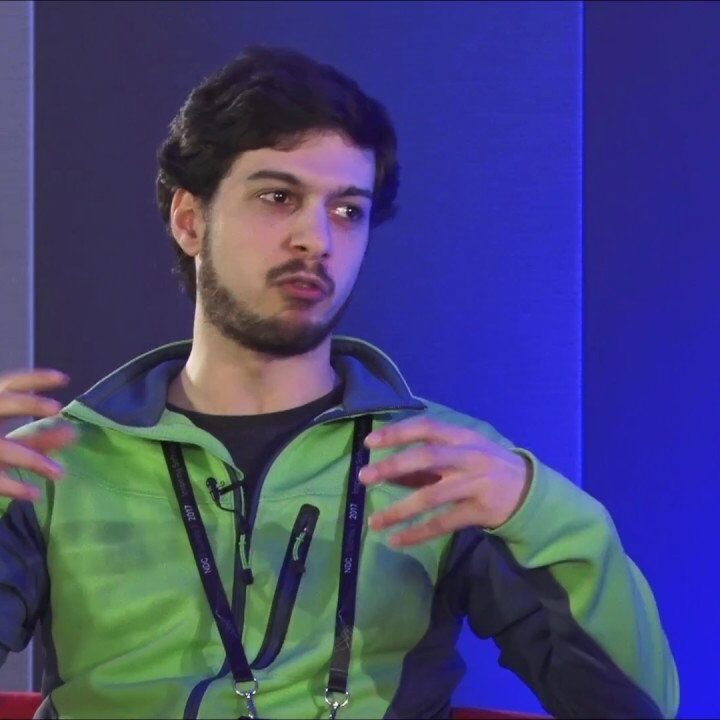
While at NDC in Sydney, Carl and Richard chatted with Daniel Chambers about his experiences in functional programming, starting with F# and moving to Haskell. Daniel talks about how F# serves as the gateway drug for functional programming, living within Visual Studio and still inter-operating nicely with the object-oriented world.

But sometimes you want pure functional, and Haskell can help you – communicating with it via web service models, you write purely functional, immutable code. The tooling is a bit different, but the benefits are significant!

About the speakers
About the speakers

Mr Functional Programming

Daniel Chambers has a passion for functional programming and quality software. During the day, you can find him writing Haskell and for the .NET platform with F# and C#. He works as a Senior Consultant for Readify.

Richard Campbell wrote his first line of code in 1977. His career has spanned the computing industry both on the hardware and software sides, development and operations. He was a co-founder of Strangeloop Networks, acquired by Radware in 2013 and was on the board of directors of Telerik which was acquired by Progress Software in 2014. Today he is a consultant and advisor to a number of successful technology firms and is the founder and chairman of Humanitarian Toolbox (www.htbox.org), a public charity that builds open source software for disaster relief. Richard is also the host of two podcasts: .NET Rocks! (www.dotnetrocks.com) which publishes three shows a week to .NET developers and RunAs Radio (www.runasradio.com) which is a weekly show for IT Professionals.

Carl Franklin is Executive Vice President of App vNext, a software development firm focused on modern methodologies and technologies. Carl is a 20+ year veteran of the software industry, co-host and founder of .NET Rocks!, the first and most widely listened to podcast for .NET developers, a Microsoft MVP for Kinect for Windows, a Microsoft Regional Director, and Senior Executive of Pwop Studios, a full-service audio and video production/post production studio located in Southeastern Connecticut.

Related videos

Related videos

Treat Your Code Like Uranium | Adam Cogan

Adam Cogan shares a striking story comparing two World War II factories—one ordinary, one handling uranium—and the surprising lesson that the uranium workers lived longer because they followed disciplined, risk-aware practices. He connects that idea to software teams: the best outcomes come from careful habits like automated tests, telemetry, pull requests, retrospectives, shared rules, and good tools. The message is simple: treat software delivery with the same respect as dangerous work, and you’ll reduce stress, avoid chaos, and get better results.

3 Tips for Better Video Recordings | Adam Cogan

Great coaching can dramatically improve how you present, communicate, and learn. In this video, Adam Cogan shares 3 practical coaching tips that SSW uses every day—from onboarding and role plays to improving video delivery. He explains why having a coach matters, why immediate interruption beats delayed feedback, and how repeating corrections helps lock in better habits.

TinaCMS + Fumadocs: Bring Visual Editing to Your Docs | Hark Singh

Discover how to connect Playwright with AI agents and unlock powerful workflows.

Stop Using 👍 Wrong in Teams | Adam Cogan

A quick communication tip from Adam Cogan: don’t use 👍 as a catch-all response when someone assigns you a task in Teams, Slack, or Google Chat. In the example Adam gives, if a task will take about five minutes, a thumbs up is too ambiguous because it does not clearly say whether you’ve read it, agree with it, are doing it now, or will do it later. Instead, use 👍 for agreement, 👀 to show you’ve seen the task and are actively working on it, and then replace 👀 with ✅ once the task is done. It is a small change, but it removes ambiguity and cuts down unnecessary follow-up messages.

How to record a done video in SSW | Sylvia Huang | SSW Rules

Sylvia Huang from SSW shares her SSW Cultural Exchange experience from Hangzhou, China to Australia

4 Essential Sales Tips for Engineers | Adam Cogan

Not a salesman? No problem. Adam Cogan shares 4 practical tips to help engineers navigate sales meetings with confidence. Learn how to stop “selling” and start solving, how to talk numbers without the awkwardness, and why being transparent about your process wins more clients.

Do you explain why you’ve deleted or updated an appointment? | Adam Cogan | SSW Rules

Ever wonder why a meeting was moved or cancelled? Adam Cogan explains the “Secret Ingredient” to professional scheduling: always include a version history and reason for change at the top of your appointments. Improve clarity, keep a record of changes, and hold participants accountable with this simple SSW Rule.

Chat first before changing others’ code | Adam Cogan

Changing someone else’s code? Don’t just dive in! Adam explains why it’s important to check the source history and talk to the original developer before making changes. A quick chat can save headaches and keep everyone on the same page. Perfect advice for devs working in teams!

SSW TimePro – Create a new tenant | Jeoffrey Fischer

Learn how to provision a new tenant in TimePro and sync it with an external Dynamics 365 CRM system.

How to Report Bugs in Seconds | Brady Stroud

Tired of tedious bug reporting? Watch how Brady uses YakShaver.ai to turn a quick screen recording into a professional PBI instantly.